
"After 25 Years in Complementarianism, I Couldn’t Ignore This Anymore"
One Woman's Journey: "I loved my church. I still do. But years of ministry, study, and listening forced me to confront questions I could no longer avoid."


This week, we continue our intermittent series featuring guest posts by women from evangelical Protestant complementarian spaces who have awakened to God’s desire for mutuality. Please note her description of the role that emotion plays in response to the hurt and harm experienced within complementarianism towards the end of this article — her words on this subject are a much-needed correction to critiques that women are just “too emotional.”
As Lindsey says, she’s been worshiping and serving in this kind of space for a long time. She mentions coaching women as part of her ministry. I know that, although her staff job includes leading a women’s ministry and providing pastoral care to women, men from the church regularly make appointments to speak with her. And why not — this is how humans work. When it becomes known that someone has a gift for helping people, then those in need will seek that person out, often regardless of gender. Now, here is Lindsey’s story:
I have been at my home church for close to 25 years. My church has been a place of tremendous learning and growth for me. It’s also been the place where I have grown and raised my family. I love my church; it has truly been like a family.
I have served in many capacities over the years. I’ve served in our children’s ministry and at VBS, worked as a financial counselor, organized and run a homeschool co-op, written a couple of children’s books, and helped write curriculum for VBS and our children’s ministry. I’ve written Bible studies, served on the Connect team, organized and facilitated events and classes. I’ve changed toilet paper rolls and paper towel rolls. I’ve taught and co-led several classes, including Bible studies. I’ve spent my time slowly stepping into a wide array of opportunities presented to me as I have learned and grown.
One of the things we hear regularly in our sermons and in our spiritual formation classes is an invitation to grow to become your true self in Christ, the “you” that God created you to be. Part of that journey is stepping into invitations to learn and grow, and as we do so, we often discover the strengths, gifts, and talents that the Lord has given us and called us to steward well.
My journey has been a slow one, taking baby steps into invitations and opportunities for growth and learning. I have often stepped into opportunities feeling nervous, knowing I would be doing new things outside my comfort zone. In doing so, I have personally and spiritually grown in many ways, and have been waking up to more of who God has created me to be.
That brought me to my current role as a deacon and a staff member. I’ve always loved teaching, previously as an elementary and preschool teacher, but I’ve come to realize that I LOVE teaching in my church. I love facilitating groups. I love creating spaces and opportunities for learning and growth, whether it's taking a deep dive into an inductive study of scripture in mixed-gender Bible studies or facilitating a class for women where we study the Bible, read a book, or learn about spiritual formation.
More recently, this journey has brought me to a place where I have realized I also have a desire to preach.1 Not only that, I know there are other women here (at least five that I know of!) who also desire to teach and preach. There are also teen girls who have expressed this desire and asked questions, and I’m sure there are other women we don’t know about.
I’ve sat through class after class, women’s event after women’s event, and listened to my sisters teach, share, and give homilies (that were basically sermons), and often walk away thinking how encouraging, edifying, and helpful it would be for my brothers in Christ to listen and learn from them as well.
I have spent the past five years studying and researching the topic of women in the church and ministry. I studied this topic extensively before realizing that the Lord was awakening in me a desire to preach.
To be honest, it was scary to study this issue after being in a complementarian space for so long. Change is scary for me, and I don’t love conflict. I haven’t taken this issue lightly, but after my study and research, I believe qualified women should have the opportunity to teach and preach to groups that include both men and women.
I believe there is ample linguistic, literary, and historical evidence throughout scripture supporting this. We see evidence both in the Old Testament and the New Testament of women speaking God’s word aloud, leading, prophecying, and proclaiming the gospel; from Miriam who was a prophet, to Deborah who was a prophet and judge of Israel who publicly led and spoke authoritatively, to Huldah, another female prophet who was consulted by male leaders and priests, to Mary Magdalene and other women who were the first witnesses to the resurrection sent to the apostles to proclaim and announce it, to Priscilla, Phoebe, Junia, and other women Paul calls deacons, coworkers, house church leaders, prophets, and so on.
When we read the Bible through the lens of its historical context, I believe that we find that the few restrictions we see for women are situational and are limited, and do not apply to all people for all time and in all places. In scripture, we see women playing essential roles in advancing God’s plan of redemption throughout history and in the life of the early church, and participating in God’s mission in particular and significant ways.
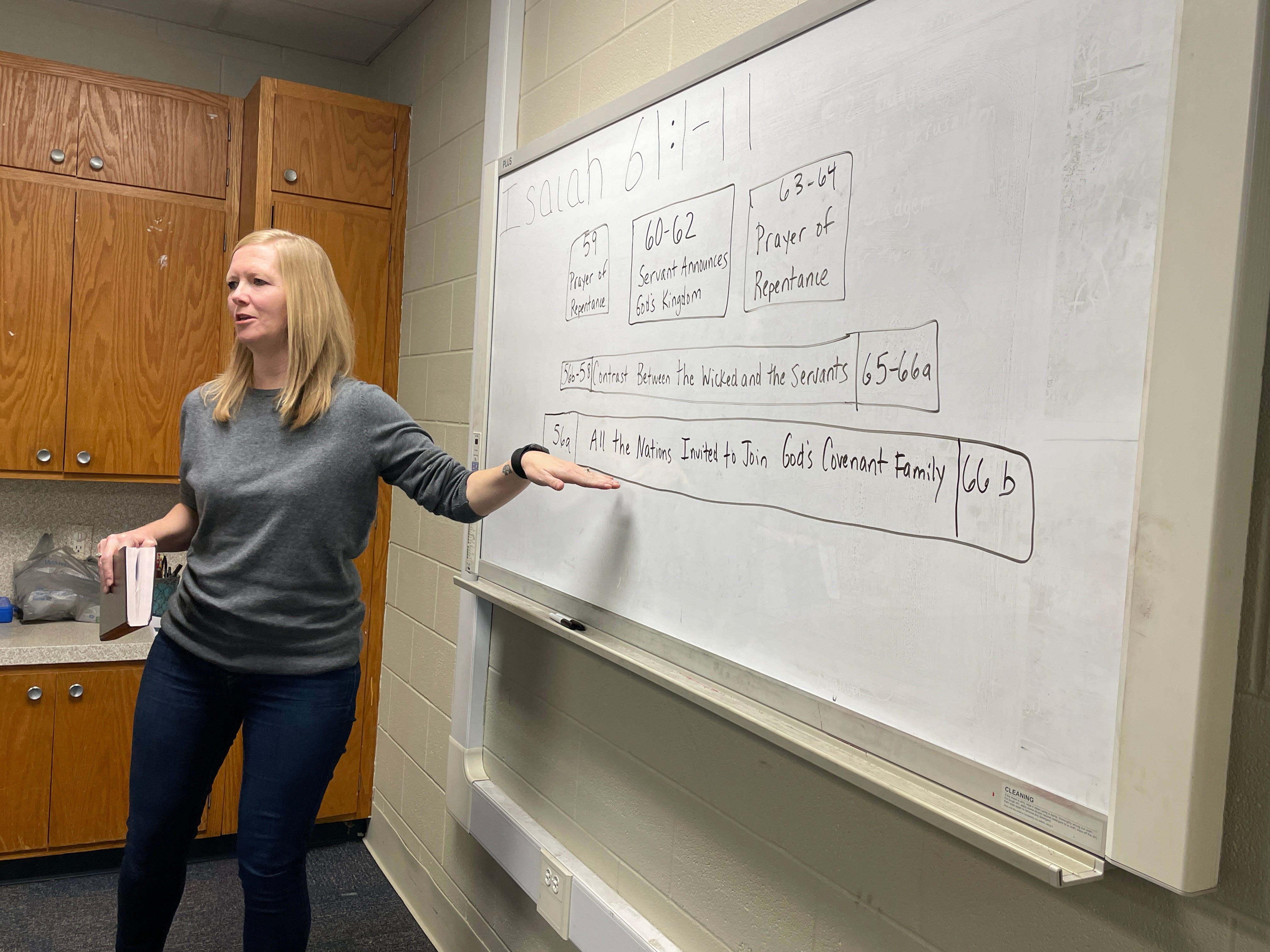
There has been a great deal of hurt and harm experienced by women (and men) over the years who have lived and participated in patriarchal and complementarian systems and environments. I have sat with several of these women. I am friends with these women, and I am one of those women. I have also coached and counseled numerous women across the country who have also experienced hurt and harm in complementarian spaces.
These stories of hurt and harm can be difficult to hear and can often make us feel uncomfortable. There is often deep pain and significant emotion in these stories. The emotion is not bad, nor should the emotion discount the validity of what someone is sharing. If someone is “emotional”, it’s because they are human and they have lived through something difficult.
We may also see strong emotion and passion because people care deeply about this issue. I just invite you to be curious. Regardless of which side of this issue you are on, pay attention to those feelings of defensiveness, self-protection, anger, and so on as you read and listen to perspectives that may be different than yours. Pay attention, notice, and get curious about what might be going on within you.
If we are truly the body of Christ and functioning as a family, every voice matters, and we can benefit from listening and learning from one another. Men are not the head of the church. Women are not the head of the church. Christ is. The rest of us make up the body, and if half or more of that body lacks a voice, we are just limping along and not fully reflecting God's image.
We have already seen so much beauty and fruit from the spaces and teams that we have intentionally invited women into. I’m proud of my church. I love my church. I hope and pray that we can continue to learn and grow together, and that we can all step into the life of the church, encouraged and empowered to use and share our gifts with one another, regardless of gender.
It remains to be seen how Lindsey’s story will play out, how many twists and turns the road ahead will offer, and how she and the other women she refers to (who feel led to preach) will respond to whatever twists and turns may come. Next week, I will publish an article that exposes duplicity on this issue within the largest Protestant denomination in the U.S.
Bobby here. Just wanted to footnote this in case any online bullies want to fault her for saying she has a desire to preach, rather than saying something like “I feel called” or “led” to preach. If Paul can have “ambition” (φιλοτιμέομαι (filotimeomai)) to preach the gospel (Rom. 15:20), and if it is a good thing to “aspire” (ὀρέγω (oregō) to be an overseer (1 Tim. 3:1), then Lindsey can use the language “I desire” to preach.
The men benefit greatly from listening to a woman's lesson. A woman led our home fellowship yesterday. We had several pastors in attendance. Afterwards, one of them commented that only a woman could have had the insights that were shared. He was deeply grateful.
“ We may also see strong emotion and passion because people care deeply about this issue. I just invite you to be curious. Regardless of which side of this issue you are on, pay attention to those feelings of defensiveness, self-protection, anger, and so on…”. YES! Women are not the only gender that has the potential to be “led astray” or “unduly influenced “ by emotions.